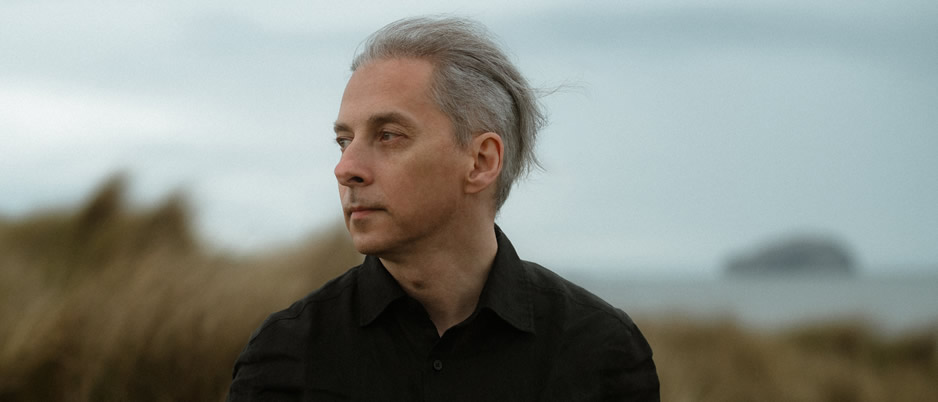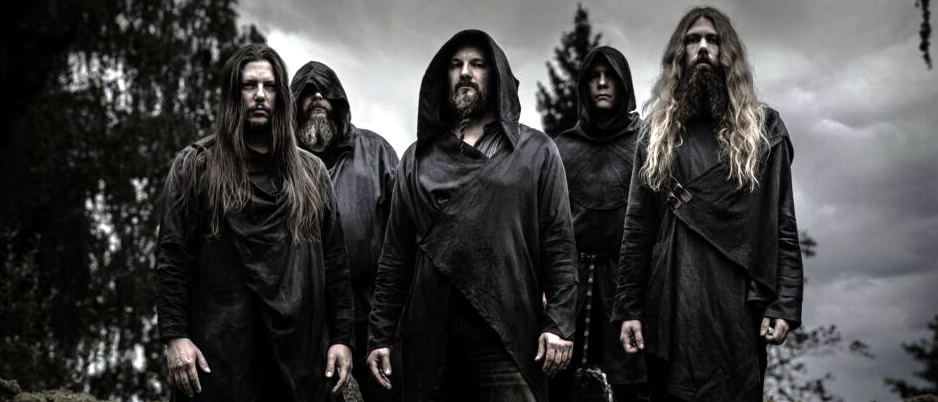
SOURCE – A Plague upon Thee is the latest studio release by Apocalypse Orchestra. How do you see this body of work fitting into the band’s catalogue in terms of songwriting and performance?
Mikael Lindström (hurdy-gurdy, bagpipes, nyckelharpa, backing vocals) – Compared to our first album, A Plague upon Thee is a bit more refined. We took the things we liked most and expanded them. It is more epic and grand in nature, with bigger and more intricate arrangements. Erik worked extremely hard on the lead vocal parts and really pushed himself to the limit! We also added some new instruments to the mix, such as the hammered dulcimer and the Swedish bagpipe, to add extra flavour. Lyrically, it continues our fascination with unusual medieval themes.
SOURCE – Upon its release, how did the initial critical response align with or diverge from your expectations? In what ways did this early feedback influence your perspective on the album’s strengths and weaknesses?
Mikael Lindström (hurdy-gurdy, bagpipes, nyckelharpa, backing vocals) – You’re always hoping for positive reviews, of course, but we know that we’re not everyone’s cup of tea. Overall, the reception has been good, and we’re proud of what we’ve accomplished. It is interesting to see which songs our fans like most compared to the ones we prefer ourselves — they are not always the same.
SOURCE – Apocalypse Orchestra’s music is rich in effects, arrangements, and tonal textures. What are the main challenges in reproducing the band’s songs live?
Mikael Lindström (hurdy-gurdy, bagpipes, nyckelharpa, backing vocals) – To perform everything on the album live, we would need around a hundred people on stage. The choirs are massive, and there is a lot happening all the time, such as organs and harmonies. We use backing tracks to make this work, but we try to do as much as we can ourselves, and some arrangements may be slightly different to make them more interesting. It can be quite challenging to sing backing vocals and then immediately start playing the bagpipes!
SOURCE – In recent decades, popular culture surrounding Vikings and Norse themes has become hugely successful, gaining a strong fan base and widespread media attention. How has the popularisation of this theme helped promote Apocalypse Orchestra’s music and broaden the band’s horizons? What are your favourite series on the subject?
Mikael Lindström (hurdy-gurdy, bagpipes, nyckelharpa, backing vocals) – We do get comments like, “This is true Viking music,” sometimes, which is interesting, since there is really no “Viking” content in our music. However, I believe that because many of the authentic melodies we use are so old, they resonate on some level with people interested in Viking culture.
The rise of Norse and Viking cultural awareness can be seen in the festival scene. One example is the Midgardsblot Festival in Norway, where the main theme is Norse-sounding music and metal. We have played there twice, and it is an excellent festival with a magical atmosphere — lots of happy people dressed as Vikings, a market, and even lectures on the subject.
Internet algorithms often pair us with bands like Wardruna and Eihwar, which also helps in a way.
I personally have no favourite series, as I’m more interested in the medieval period, but my favourite films in that genre are “The Northman” and “Hrafnin Flygur” — both dark revenge stories set in Iceland.
SOURCE – In the era of globalisation, non-English music has seen a remarkable rise, with various genres achieving mainstream success worldwide. How do you view the growing prominence of music sung in languages other than English? Do you believe this shift reflects a deeper desire for cultural exchange in music, or is it merely a trend driven by the expansion of digital platforms and social media?
Mikael Lindström (hurdy-gurdy, bagpipes, nyckelharpa, backing vocals) – That’s a hard question! I believe one factor behind this increase is that we now have access to fast and easy-to-use online translation tools, which make it possible to communicate even when using a foreign language. In folk-inspired music, such as folk metal, I think singing in your native tongue sometimes enhances the experience, especially if the melodies come from the same region. It may also help deepen your connection with your own culture.
SOURCE – Streaming has completely redefined how music is discovered and consumed. How has your mindset evolved over the years when it comes to releasing new material in a landscape where algorithms and playlists often dictate what reaches listeners?
Mikael Lindström (hurdy-gurdy, bagpipes, nyckelharpa, backing vocals) – I would say there is a lot of luck involved, and if you don’t have a huge advertising budget, there isn’t much you can do other than interviews and live shows. Our first video went kind of viral, with millions of views, and we’re not sure why. Of course, it is a good song, but it was really insane. Our new videos are nowhere near those numbers.
SOURCE – What lessons have you learned from previous promotional campaigns that have significantly influenced your approach to your latest release?
Mikael Lindström (hurdy-gurdy, bagpipes, nyckelharpa, backing vocals) – I’m not sure, since most of the promotional work has been done by our record label. We try to communicate as much as possible through social media, but honestly, it is quite hard to reach people.
SOURCE – Is there anything you’d like to say to those who’ve supported you from the beginning — and to those who are just now discovering your music?
Mikael Lindström (hurdy-gurdy, bagpipes, nyckelharpa, backing vocals) – We are forever grateful to everyone who listens to our music, both new and old. Without you, we wouldn’t exist. Hopefully, we will get to meet you at a show someday!
Photo credit: Jonas Hammar
Contacts:
Video:
- NOTE ABOUT AI USE IN THIS DOCUMENT
This document has been thoroughly reviewed and corrected for spelling, grammar, and syntax errors using advanced, AI-powered proofreading tools. The system is designed to analyze and enhance the text while preserving its original tone and meaning in accordance with standard English conventions.
The proofreading process included the identification and correction of typographical errors, sentence structure issues, and punctuation inconsistencies. The document has been refined to meet the highest standards of grammar, spelling, and readability.