SOURCE – Humanity arrives five years after Urhat. What changed in your creative vision during that period, and why did 2026 feel like the right time to begin this new chapter for ILLT?
ILLT (Guitars, bass and keys) – I’ll try to make this long story as short as possible, haha. «Urhat» was made during a good period in my life, whereas «Humanity» was written during dark times in the aftermath of Covid and a deep personal crisis. It’s fuelled by anger and sadness. Lyrics-wise «Humanity» deals with issues that felt more relevant to me during that period of writing. As for the music itself, I’ve just expanded the «sandbox» concept and incorporated more rock influences, and generally explored how far I can push the contrasts. The album has been finished for a couple of years, but after two years of second-guessing and a lot of personal issues to address, 2026 feels like the perfect year to set things in motion again.
SOURCE – The title Humanity is both broad and provocative, especially in the context of extreme metal. What does that word represent on the album, and are you examining humanity with anger, concern, empathy, or a combination of all three?
ILLT (Guitars, bass and keys) – I guess you kind of answered that one for me. Yes, I would say all three. For me it’s a story of wasted potential. The album itself raises more questions than answers. What does it mean to be human? What does it mean to you? Is it a Greek tragedy? Is there a happy ending in sight? Did we lose our way, and start walking in circles? For me, I guess to be human is to accept my flaws, and still try my best to be good. It’s easy to point fingers at world leaders, the governments and politics, when we in fact should start with ourselves. What can I contribute? How can I make today a bit better for someone? We, the common people, have to look after each other, because sure as hell nobody else is.
SOURCE – Your background as a film composer gives you a distinctive understanding of atmosphere and dramatic progression. How did that experience influence the arrangements, dynamics, and emotional arc of Humanity?
ILLT (Guitars, bass and keys) – I guess you can tell from the length of some of my songs, haha. I’m used to telling stories in longer formats in my day job as a film composer, so it comes kind of natural for me when writing for ILLT as well. I have tried to write a 3-minute banger, but they usually tend to end up twice the length. It’s just how I’m built, I guess. I work until I’m happy, and don’t really care about the length at all. It’s like editing a film. It would be pointless to set a goal to have the film run at 90 minutes, if it’s a much better film at 2 hours. And the other way around of course. It’s still great fun to explore how long I can keep my own and the listeners’ attention.
SOURCE – ILLT combines blackened death metal, thrash, doom, and rock without being restricted to a single genre. Was it more difficult to maintain that creative freedom on Humanity once listeners had Urhat as a reference point?
ILLT (Guitars, bass and keys) – I’m always changing, so it would be strange and pointless to make Urhat all over again. It was a product of its time, and «Humanity» is no different. I think of music albums as photo albums. It’s simply a photo of exactly where I was at a given period in time. ILLT is a sandbox project with above all great creative freedom that will keep some fans, lose some fans, and gain new ones along the way. The albums will share the same DNA but wear slightly different clothing. For example, I’m thinking of doing a thrash/black metal/americana crossover for the next album.
SOURCE – Dirk Verbeuren and Björn “Speed” Strid return after their involvement with Urhat. How have your creative relationships with them developed since the first album?
I think I pushed their boundaries even further on this record. Some very fast and intricate passages that probably looked a whole lot easier on paper than in reality, haha. To no one’s surprise they both nailed it once again. They are two wonderful and extremely skilled gentlemen that I consider myself privileged to be working with.
SOURCE – Kurt Ballou and Alan Douches contributed to the sound of Urhat. What production qualities were you seeking for Humanity, and how important was continuity in the mixing and mastering stages?
ILLT (Guitars, bass and keys) – I think the vibe of ILLT should be felt no matter who handles the mixing and mastering. For «Humanity», I wanted to try a new approach to recording guitars and mixing, which Fredrik Nordström at Studio Fredman is handling really well. He also does the mastering himself, so it became a one-stop shop for the whole post-production of the album. I love exploring musical ideas and different types of arrangements, and the same goes for mixing and mastering. I’m not really married to any engineer or studio, so we’ll see on the third album which direction we’ll go from there.
SOURCE – With streaming platforms encouraging frequent singles and immediate consumption, how do you preserve the value of a full album as a complete artistic statement?
ILLT (Guitars, bass and keys) – I don’t know if anyone cares about albums on digital platforms anymore. However, for me as an artist, it makes sense to convey my message across several songs, and not cram everything into one single. But never say never. Maybe I’ll try to release a series of singles down the road and see where that takes me, but for now it’s easier in the life I live to just lock myself in the studio and write bigger batches of songs between my film scoring projects.
SOURCE – Beyond conventional music videos, what visual formats do you believe could convey ILLT’s cinematic character more effectively in today’s digital landscape?
ILLT (Guitars, bass and keys) – Tough one. I would never use generative AI in my videos, and the low budget as an independent artist would probably never allow me to fulfil my crazy visions. But in a parallel dimension or after winning the lottery I would love to make an ambitious and visually striking short film featuring all new ILLT material scored to picture. Getting people to watch it is a whole other game, though. It’s getting harder and harder breaking through all the noise these days.
SOURCE – How does your work as a composer interact with ILLT, and where do you draw the line between commissioned work and the creative freedom of this project?
ILLT (Guitars, bass and keys) – I try to keep them separated, although both activities happen in the same environment. The mindset is a lot different, though. Working as a film composer I have to deliver crazy amounts of a given genre of music on time, which has to sound exceptional and support the visuals perfectly. It is as rewarding as it is completely exhausting. ILLT, on the other hand, is all about breaking these chains, and writing good music for the sake of writing good music, which again feeds my ego and at the same time hopefully resonates with my fans.
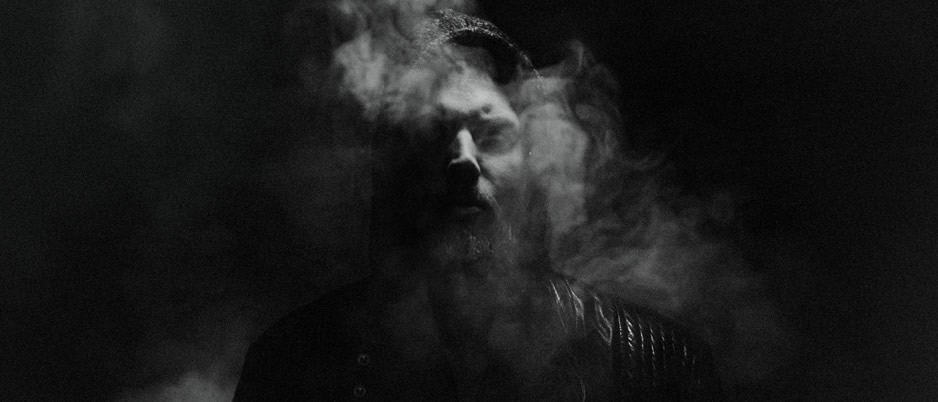
PHOTO CREDIT
Jørn Veberg