SOURCE – When did you realize Sotera needed to mark a new chapter?
Joseph E. Martinez (Vocals, Guitars, Synthesizers) – I think it became a new chapter almost by necessity. Eternal Rituals for the Accretion of Light finished the trilogy we had been working on for years, and afterward, I actually had a difficult time figuring out what Junius was without a larger concept guiding it.
Then life took over. We had more kids, moved across the country multiple times, went through COVID, and added three new members to the band. Nine years passed, and by the time I really started writing Sotera, Junius simply wasn’t the same band anymore.
Once I found Medea and started going down that rabbit hole, everything clicked. Suddenly, I had a concept I was obsessed with again, but I was approaching the music very differently. I was less afraid of simplicity, more comfortable being aggressive, and much more comfortable with my voice. At that point, I knew I didn’t want to make a record that tried to reconnect us to 2017. I wanted to make a record about what Junius had become.
SOURCE – What does Sotera mean?
Joseph E. Martinez (Vocals, Guitars, Synthesizers) – Sotera is the feminine form of the Greek Soter, meaning “savior.” That word basically became the key to the entire record.
I had become obsessed with Medea and started digging beyond the version most of us know from Euripides. The deeper I went into these older traditions, the more I became fascinated with the idea of Medea not simply as this murderous woman we’ve inherited from the tragedy, but as a healer, magician, priestess, and potentially a kind of female savior figure.
That eventually led me to this intentionally provocative idea at the center of the album: what if the first Christ was a woman? I came across the Dioscorides tradition, where Medea is the one performing what I started calling the act of “Christing” Jason. That completely captured my imagination. If the person who builds is a builder, what do you call the person who Christs?
I’m not presenting that as some conventional historical claim. It became the mythology of the record and opened up this enormous question for me: what would our civilization look like if the sacred feminine had remained at the center of the salvation story instead of being pushed to its edges?
That’s Sotera.
SOURCE – Did you feel pressure to make Junius more accessible?
Joseph E. Martinez (Vocals, Guitars, Synthesizers) – Not really. If anything, I think I’ve become less concerned with that as I’ve gotten older. There are definitely more immediate songs on Sotera, but that wasn’t because we were trying to write for playlists or algorithms. I’ve just become much less afraid of simplicity. When I was younger, if I wrote a really simple riff or melody, I sometimes felt like I needed to disguise it with ten other things to make it interesting. Now, if something is heavy or beautiful and it works, I’m much more comfortable just letting it work.
I also think accessibility and experimentation aren’t necessarily opposites. You can have a melody that sticks in somebody’s head and still surround it with something strange, atmospheric, or incredibly heavy. That’s always been part of Junius.
If anything, Sotera is probably simultaneously one of our more immediate records and one of our more aggressive ones.
SOURCE – How did you keep the production organic?
Joseph E. Martinez (Vocals, Guitars, Synthesizers) – A big part of it started before there was any post-production. We recorded the drums to two-inch tape at New Alliance, which immediately gave us something physical and human to build around. Then I ran everything through T805 tape hardware that runs the signal through a tape element. So, essentially, this album is a tape record. Sounds great to me.
SOURCE – Is modern metal becoming homogeneous?
Joseph E. Martinez (Vocals, Guitars, Synthesizers) – I don’t know if metal is necessarily becoming more homogeneous, because there are probably more different kinds of heavy music being made right now than at any other point in my life. But I do think production has become more homogeneous.
We all have access to a lot of the same tools now: the same amp simulations, drum samples, plug-ins, editing techniques, tunings, and even the same tutorials showing you exactly how to get a certain sound. Those tools are incredible, but there’s obviously a danger that everyone ends up arriving at the same version of “perfect.”
Junius has always been a little difficult to categorise anyway, which probably helps us. We’re pulling from metal, shoegaze, goth, alternative rock, electronic music, and whatever else we’re listening to. We don’t really sit down and ask how we’re going to distinguish ourselves from other metal bands.
Usually, we’re just trying to make something that sounds like Junius.
SOURCE – How do you preserve Junius’s identity while evolving?
Joseph E. Martinez (Vocals, Guitars, Synthesizers) – I don’t think we’ve ever consciously tried to preserve it. There are certain things I naturally do that make something sound like Junius: the way we layer guitars, the melodies I gravitate towards, repetition, atmosphere, the way Dana plays drums, and my voice. Those things follow us around whether we’re trying to sound like ourselves or not.
SOURCE – Is there a recurring criticism you disagree with?
Joseph E. Martinez (Vocals, Guitars, Synthesizers) – I’m sure there are plenty, but honestly, I’ve never spent much time worrying about it. If somebody has been listening to us long enough to have a detailed complaint about what Junius should sound like, I’m mostly just grateful they’ve been paying attention.
SOURCE – Is Sotera a culmination or a first step?
Joseph E. Martinez (Vocals, Guitars, Synthesizers) – Definitely a first step. In some ways, Sotera feels less like the record we’ve been trying to make for nine years and more like discovering what Junius can be now.
We have three guitarists, my voice has changed, the band is heavier, and there are people contributing creatively who weren’t part of the earlier versions of Junius. We’re still figuring out what all of that makes possible.
And creatively, Sotera opened a door for me that I don’t think I’ve finished walking through yet. The research behind Medea, the divine feminine, ancient ritual, and these alternative histories became much bigger than I expected it to. I thought I was researching an album and somehow ended up finding the beginning of something else. So I don’t see Sotera as the culmination of this version of Junius at all. It feels more like the first record by the band we’ve become.
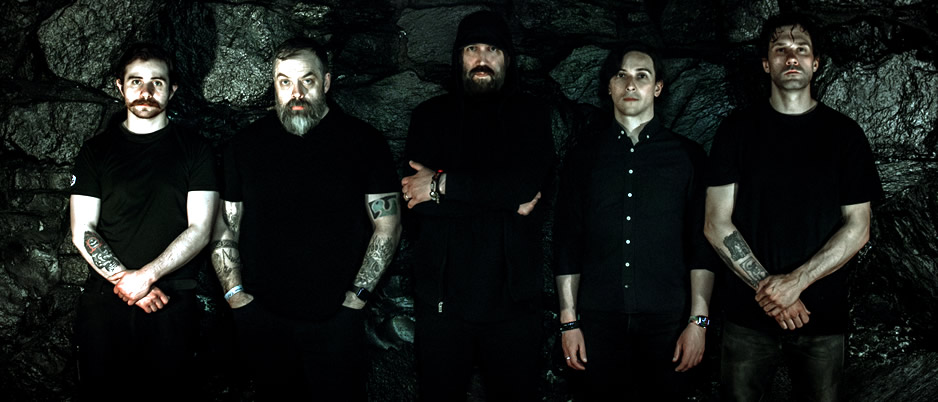
Photo credit: Matt-Darcy
Contacts:
Video:
- NOTE ABOUT AI USE IN THIS DOCUMENT!
This document has been thoroughly reviewed and corrected for spelling, grammar, and syntax errors using advanced AI-driven proofreading tools. The AI system used is designed to analyze and enhance the language of the text, ensuring it adheres to proper English conventions while maintaining the original meaning and tone.
The proofreading process involved identifying and correcting typographical errors, sentence structure issues, and inconsistencies in punctuation. The document has been refined to meet the highest standards of spelling, grammar, and overall readability.